
 What is a Taste Test?
A taste test is a small sample of food offered either in the classroom, or in the cafeteria at lunchtime, introducing its flavor, texture and smell. The item might be a dollop of fresh salsa with a handful of corn chips, a small 2-oz. serving of roasted root vegetables, or a mini whole wheat carrot-maple muffin. After the sample has been offered, children (and adults) vote on whether they tried it, liked it, and would be willing to try it again.
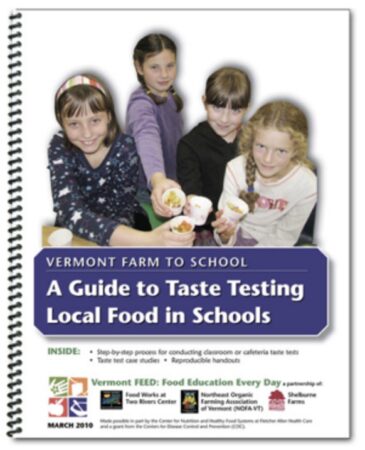
Produced by Vermont FEED, this Guide to Taste Testing Local Foods in Schools is designed to help school nutrition staff, teachers and farm to school coordinators develop a successful taste test program, a strategy which Vermont FEED has found to be effective at encouraging children to try new foods, explore a variety of healthy dishes, and develop lasting healthy eating habits.
Started in 2000, Vermont FEED (Food Education Every Day) is a collaborative farm to school project of two organizations: the Northeast Organic Farming Association of Vermont (NOFA-VT) and Shelburne Farms Institute for Sustainable Schools.
This guide provides the tools and resources to help implement a taste testing program in your school in order to:
- broaden student experiences with a variety of foods
- introduce foods that are locally grown and available
- integrate new, local foods into school meal programs and get students to eat them!
- involve students and staff in school food change
Sample Timeline for Coordinating a School-wide Taste Test
2-3 WEEKS PRIOR TO THE TASTE TEST:
- At the food committee meeting with food service personnel, decide what food will be tested. Make sure foods chosen fit into the school food program and align with your committee goals.
- Find a class(es) that is willing to prepare the food in the kitchen or classroom the morning of the taste test and that will help serve and survey.
- Find parents/volunteers who will help serve and clean up.
- Prepare an announcement of the taste test for the school newsletter or email
- Research and share nutritional information about the food, and have the recipe ready to send home to students’ families.
- If purchasing from a farmer, contact him/her to be sure the product will be available when you need it.
ONE WEEK PRIOR:
- Check with food service and classrooms involved to make sure everyone is prepared.
- Make sure necessary food items have been purchased or are being delivered on the date needed.
- Prepare a taste testing survey.
- Advertise the taste test: school newsletter, school website, all-staff email, invite local paper!
DAY OF:
- Announce the taste test during announcements, classroom meetings, and with signs in the lobby
- Help food service set up for hosting students in the kitchen.
- Have the food service explain about food safety when preparing foods. Make time for everyone to wash their hands and put on hairnets or hats.
- If preparing in the kitchen, small groups of 4–5 students work best. If preparing in the cafeteria or classroom, divide the preparation tasks into small groups.
- Remind children to respect the workspace and workers.
- Rotate groups from classroom to kitchen, if necessary.
- Set up taste testing table before lunch periods begin.
- Take pictures and notes to report in your newsletter.
DAY AFTER:
- Send a letter home to parents describing the taste test, the food their child tasted, and the recipe to try at home.
- Have a classroom tally the results of the taste test and post them on a bulletin board or in the school newsletter.
Want to know more?!
- Download Guide to Taste Testing Local Foods in Schools here
- Check out Vermont FEED
- MSGN Cooking in Your School Garden Resource page
